
Roof trouble in Dallas rarely announces itself where it starts. Spring storms between March and June bring hail, straight line winds and sideways rain, then July and August push attic temperatures past 140°F for weeks at a stretch. Each of those forces leaves a different mark, yet the marks homeowners actually notice tend to look alike: a brown ring on drywall, grit in the gutters, a shingle edge that no longer lies flat. Matching the symptom to its real cause is what separates a repair that holds from one that gets redone next season.
That overlap between roof damage and the rooms below is where a crew with more than one trade earns its keep. The team at vanguardrc.com, headquartered up the road in Allen, works for residential and commercial owners across North Texas as a roofing company in Dallas and its suburbs that repairs, installs and replaces every kind of roof, storm damage included. Because the same team also handles siding, interior and exterior paint, and kitchen and bathroom repairs, the stained ceiling and swollen trim a leak leaves behind get fixed alongside the roof that caused them. Request a quote through the contact page and ask for one visit that covers the attic, the roof surface and the walls.
A Ceiling Stain After a Windy Thunderstorm
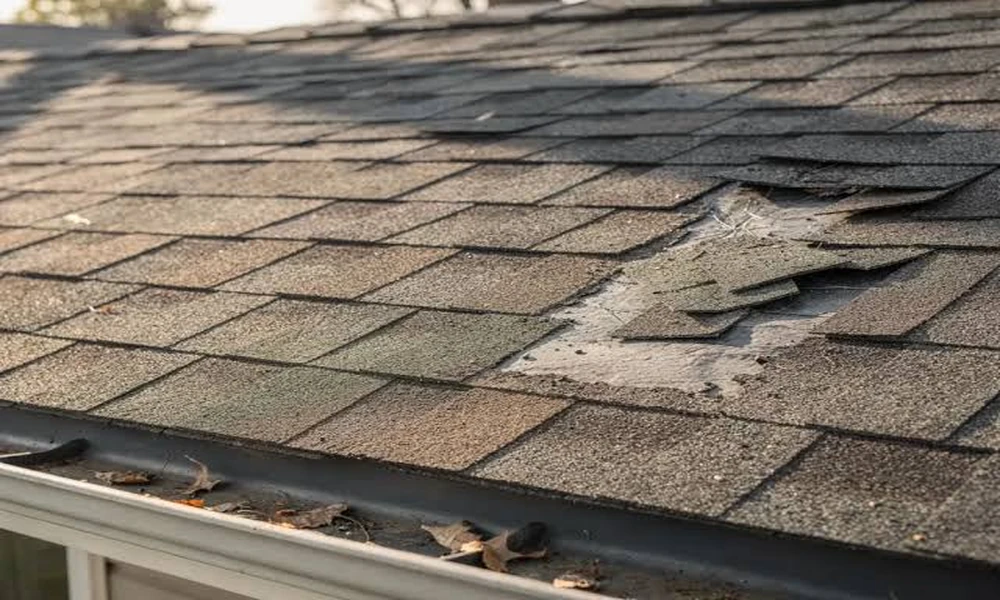
Likely cause. Dallas storms often carry gusts of 60 mph or more ahead of the rain. Wind lifts shingle tabs, breaks the adhesive strip and creases the shingle at the nail line. The tab may settle back down and look normal from the street, but water now runs under it. A second common source is the rubber collar around plumbing vents. Neoprene boots bake in Texas sun, crack after eight to ten summers and let water track down the pipe.
Fix.
- Check the attic on a dry day, tracing staining on the underside of the decking uphill from the ceiling spot, since water travels along rafters before it drips.
- Look closely at vent boots near that path. A cracked boot is a small repair, and a metal or silicone replacement outlasts rubber.
- Inspect shingles along the windward slopes for creases. Creased shingles cannot be resealed reliably and should be replaced individually.
- Repair and repaint the drywall only after a rain confirms the leak has stopped.
Granules in the Gutters and Dark Spots on Shingles
Likely cause. Hail bruises the fiberglass mat beneath the granule surface. The spots look like dark circles where granules have been knocked loose, and the shingle under them often feels soft when pressed. Some granule loss is normal on a new roof for the first year, but a sudden heavy deposit right after a storm points to impact.
Fix.
- Photograph gutters, downspout outlets, dented vents and any marked shingles before cleanup, and note the storm date.
- File the claim promptly. Under Texas rules, the insurer has set deadlines to acknowledge a claim, request information, decide and then pay, and the Texas Department of Insurance outlines each step of getting a claim paid, including how mortgage company checks are released.
- Meet the adjuster with your own contractor’s findings in hand so soft spots and bruised slopes are not missed.
- Expect to pay your deductible. Texas law bars roofing contractors from waiving or absorbing it, and any offer to do so is a warning sign.
Curling or Blistered Shingles on the South and West Slopes
Likely cause. Heat trapped in the attic. When soffit vents are painted shut, blocked by insulation or paired with too little exhaust at the ridge, the underside of the deck cooks. Shingles age from below, curl at the edges and blister. The south and west faces show it first because they take the strongest afternoon sun.
Fix.
- Measure the attic on a summer afternoon. Readings far above the outdoor temperature point to a ventilation problem rather than a material defect.
- Clear soffit intake and install baffles so insulation stops choking the airflow.
- Use a single type of exhaust. Mixing ridge vents with powered fans or box vents can pull air from the wrong openings and short circuit the system.
- Plan the next roof with a reflective or lighter shingle if your neighborhood allows it.
When the damage calls for a full replacement, the city requires a residential roofing permit once the work passes a modest dollar value, and Dallas also applies energy code rules to reroofing. The city’s storm damage repair guidance explains which jobs need a permit and which do not, including the point that tarps and minor repairs need none.
Leaks Only Where a Roof Meets a Wall
Likely cause. Missing or failed flashing. On many Dallas homes built during the 1990s and 2000s growth surge, step flashing along sidewalls was installed without a kickout at the bottom, the small bent piece that throws water away from the wall. Rain then runs behind the siding instead of into the gutter. The telltale signs sit on the wall below rather than the ceiling: peeling paint, swollen trim, soft siding near the ground.
Fix.
- Remove the lowest courses of siding at the roof line to inspect the sheathing behind it.
- Install a kickout and reset the step flashing piece by piece, with each shingle course overlapped correctly.
- Replace damaged sheathing, siding and trim, then prime and repaint so the patched section matches.
A Stain Near the Bathroom That Appears Without Rain
Likely cause. Condensation, not a leak at all. Bathroom exhaust fans in older homes sometimes vent straight into the attic. Warm, wet air meets the deck on cooler nights, and moisture drips onto the drywall around the fan. Rust on nail tips poking through the deck is a strong clue.
Fix.
- Follow the fan duct in the attic and confirm where it ends.
- Run it through a roof or wall cap to the outdoors with insulated ducting and a backdraft damper.
- Treat or replace damp decking, then repair the bathroom ceiling and repaint with a moisture resistant finish.
The common thread across all five scenarios is that the visible symptom and its source are separated by distance, time or both. A stain can sit ten feet from the opening that feeds it, and heat damage builds for years before a single shingle curls. Treating the mark without tracing the cause is how a Dallas roof ends up repaired twice for the same problem.