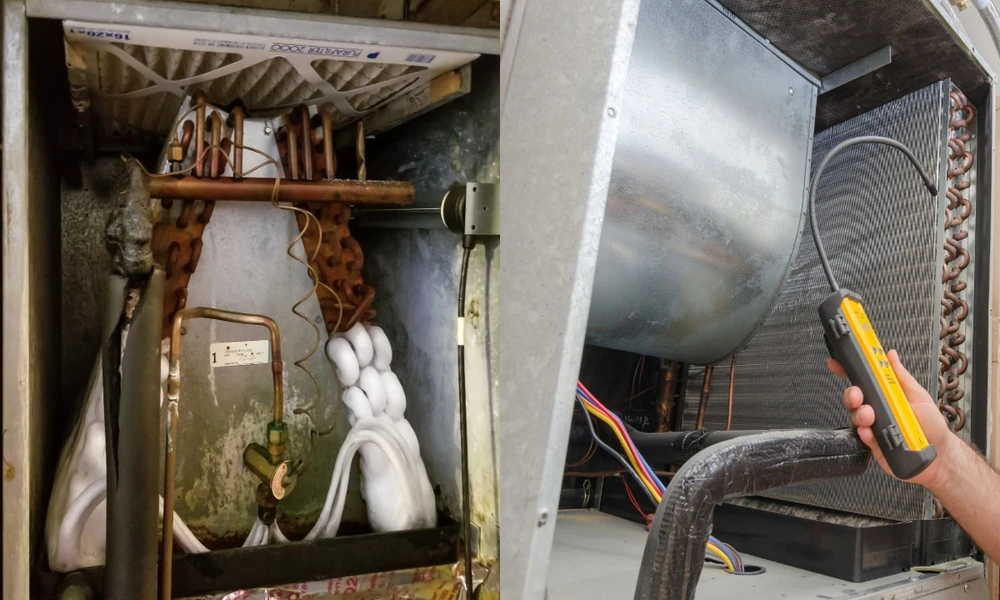

A frozen air conditioner coil is not evidence that the equipment is cooling too effectively. Ice generally develops when the evaporator surface becomes unusually cold, often because airflow is restricted or refrigerant conditions are abnormal. The visible ice is a symptom, and restarting the equipment without identifying its cause can allow the problem to return.
In Frederick County, Maryland, humid summer weather places simultaneous cooling and moisture removal demands on air conditioning equipment. A system that runs continuously but delivers poor comfort may have a mechanical fault, an airflow restriction, or controls that are not responding correctly. Frederick County hvac repair decisions should begin by separating these possibilities rather than replacing components based on symptoms alone.
For Air Conditioning Repair and Air Conditioning Service, Maryland Mechanical Services LLC works with residential and commercial cooling equipment, including Split Systems. Property owners looking for Frederick County hvac repair can visit the company website to request an air conditioning service visit.
Warm Air From Vents May Indicate a Cooling Failure
Symptom: The indoor blower operates, but supply registers deliver room temperature or noticeably warm air.
Likely cause: The outdoor unit may not be operating correctly, refrigerant conditions may be abnormal, or the thermostat may be calling for ventilation rather than cooling. Electrical component failures can also interrupt the cooling cycle.
Confirm the thermostat is set to cooling and its temperature setting is appropriate.
Check whether accessible supply and return openings are obstructed.
Have a technician inspect compressor operation, electrical controls, refrigerant conditions, and system performance.
Repair or replacement: An isolated electrical control fault may justify targeted repair. Major component damage combined with broader deterioration requires a more complete evaluation. A working indoor fan does not confirm that the refrigeration circuit is functioning.
Ice on the Indoor Coil Usually Signals Another Problem
Symptom: Frost appears around refrigerant tubing, ice develops near the indoor unit, or airflow becomes progressively weaker.
Likely cause: Restricted airflow can prevent enough heat from reaching the evaporator coil. Dirty filters, blower problems, and duct restrictions are possible contributors. Low refrigerant charge caused by leakage can also produce freezing conditions.
Turn off cooling when freezing is suspected and avoid forcing the system to operate.
Check the accessible filter and look for obvious airflow obstructions.
Have a technician determine the cause before restarting normal cooling.
Repair or replacement: Correcting a filter restriction or blower defect may restore performance. A refrigerant leak requires diagnosis and repair. The EPA Section 608 technician certification requirements apply to technicians performing regulated work that could release refrigerant from stationary air conditioning equipment. Simply adding refrigerant does not establish a lasting repair.
Short Cycling Can Reveal Control or Equipment Problems
Symptom: The cooling system starts, operates briefly, stops, and repeats the sequence without maintaining consistent comfort.
Likely cause: Thermostat faults, electrical controls, overheating components, or inappropriate equipment capacity can contribute to excessive cycling. Protective controls may also interrupt operation when unsafe conditions develop.
Check settings and whether nearby heat sources affect thermostat readings.
Record when cycling occurs and whether unusual noises accompany shutdown.
Request professional assessment of electrical components and operating conditions.
Repair or replacement: Control problems may be repairable. Persistent cycling caused by incorrect sizing or serious equipment deterioration may require a larger solution. In small offices, the result may be uneven comfort throughout changing occupancy periods.
Water Around the Indoor Unit May Be Condensate
Symptom: Water drips from the indoor unit, stains nearby ceilings, or collects below the air handler during humid weather.
Likely cause: Air conditioning removes moisture as it cools. A blocked condensate drain, damaged pan, disconnected line, or frozen coil thawing can send that water into surrounding materials.
Stop cooling if water is actively damaging building materials or approaching electrical components.
Avoid disturbing electrical equipment in wet areas.
Ask a technician to inspect drain routing, the condensate pan, safety switches, and evidence of freezing.
Repair or replacement: A blocked drain or damaged fitting may allow localized repair. Extensive corrosion, recurring condensate damage, or multiple component failures deserve wider investigation. Do not assume every puddle indicates refrigerant leakage.
High Indoor Humidity Can Persist Despite Cooling
Symptom: Rooms feel clammy, windows collect condensation, or indoor humidity remains elevated while the air conditioner runs.
Likely cause: Short cooling cycles, inadequate moisture removal, unexpected outdoor air infiltration, or incorrect controls can prevent effective dehumidification. Indoor moisture sources also contribute.
Check that bathroom and kitchen moisture sources are controlled.
Record humidity readings alongside thermostat settings and operating cycles.
Have the technician evaluate capacity, coil operation, controls, and latent cooling performance.
Repair or replacement: Controls or equipment faults may be repairable. A poorly matched system may need a design review. The EPA indoor air quality guidance recommends maintaining indoor humidity between 30 and 50 percent when practicable to discourage moisture related problems.
Continuous Running Does Not Always Mean a Failed Unit
Symptom: The system runs for long periods without reaching its thermostat setting, especially on hot Frederick afternoons.
Likely cause: High outdoor heat, solar gain, inadequate insulation, clogged coils, weak cooling capacity, or refrigerant faults can all affect performance. Commercial spaces may also have changing equipment and occupancy loads.
Note whether the problem occurs only during peak outdoor heat or throughout the day.
Replace a dirty accessible filter according to the equipment instructions.
Request professional checks of delivered cooling, coil condition, system capacity, and controls.
Repair or replacement: Cleaning and correcting specific faults may restore normal service. Repeated major repairs, severe component deterioration, or a system that fundamentally cannot serve the building may justify discussing replacement. Age alone is not enough to decide.
Regular Service Helps Separate Wear From Major Failure
Preventive checks: Before Maryland summer demand rises, qualified service should examine electrical connections, condensate drainage, coils, operating controls, and overall cooling performance. Filters and accessible outdoor clearances also deserve routine owner attention.
Decision point: A repair recommendation should identify the failed component, the evidence supporting that diagnosis, and the likely condition of the remaining system. A replacement discussion makes more sense when failures are extensive or repeated rather than confined to a serviceable part.
Conclusion
A cooling complaint is a starting point, not a diagnosis. Warm supply air, ice, short cycling, condensate leaks, excess humidity, and continuous running can arise from different causes that demand different corrections. For Frederick County homes and small businesses, systematic air conditioning service helps distinguish routine maintenance from necessary repairs and identify when a larger equipment decision is warranted.