
Asbestos was once valued for its strength, heat resistance, and ability to mix easily into building products. Those qualities placed it in many ordinary residential materials, often without any visible label or record. As a result, asbestos in homes built before 1980 can remain part of a house long after its original installation. The material is not automatically dangerous simply because it exists, but disturbance can change the situation quickly.
How asbestos was used in residential construction
Manufacturers added asbestos to insulation, cement products, flooring, roofing, adhesives, and coatings. It could help materials resist heat, fire, moisture, or wear, making it useful around furnaces and boilers as well as in everyday rooms. In some products, the fibers were tightly bound; in others, they were more easily released when the material deteriorated or was cut.
Why homes built before 1980 may contain asbestos
Asbestos was common in residential construction for much of the twentieth century, particularly from the 1930s through the 1970s. Restrictions introduced during the late 1970s reduced its use, but older products could remain in circulation and installed materials were not suddenly removed from existing houses. A home from the 1980s may also require caution, especially when its construction history is incomplete. Home age is a useful warning sign, not proof of asbestos.
When asbestos becomes a health hazard
An intact material that is left alone generally presents less opportunity for fibers to enter the air than one that is crumbling, scraped, drilled, or sanded. Water damage, vibration, repeated friction, and maintenance work can all weaken a material over time. Disturbance is the central concern because microscopic fibers may become airborne and spread beyond the immediate work area. Anyone planning repairs should treat uncertain older materials carefully until they have been assessed.
Common misconceptions about asbestos exposure
A material does not need to look dramatically damaged to deserve caution, and a clean-looking surface cannot rule asbestos out. Conversely, not every old, fibrous, or textured product contains asbestos. Sweeping or vacuuming with ordinary household equipment after a suspected disturbance may spread contamination rather than solve it. A practical overview of asbestos risks in a home can help residents understand the issue, but testing and professional advice are needed for decisions about a particular property.
Where asbestos may be found inside a home
Asbestos-containing materials can occur in concealed spaces as well as visible finishes. Their location often reflects the function they served: heat protection near mechanical systems, durability underfoot, or reinforcement in cement and coatings. A room-by-room search should not involve scraping, prying, or collecting samples casually. Instead, the location and condition of suspect materials should be documented from a safe distance.
Insulation around pipes, boilers, and HVAC systems
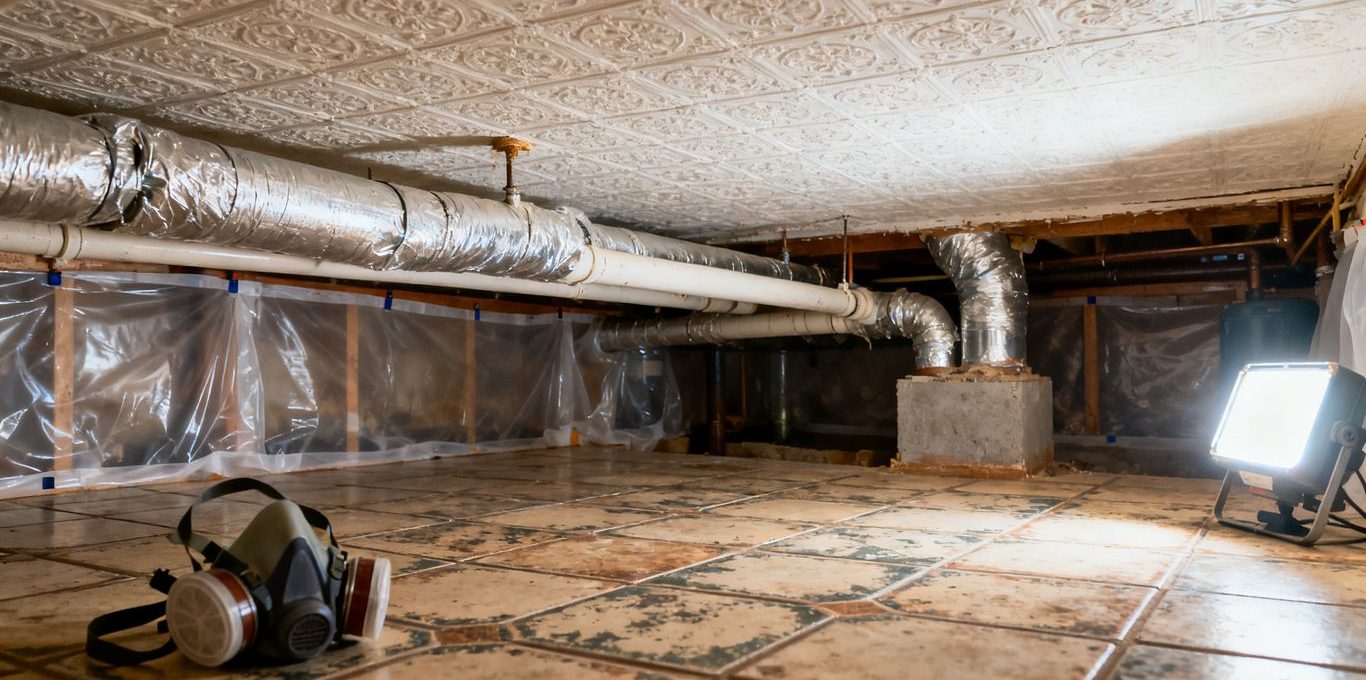
Pipe elbows, boiler jackets, furnace components, and duct connections may contain insulation, wraps, gaskets, or sealants that incorporated asbestos. These materials can be especially concerning because maintenance often requires access, and older insulation may be brittle or damaged. Mechanical rooms, basements, crawl spaces, and utility closets deserve attention before plumbing or heating work begins.
Floor tiles, vinyl sheet flooring, and adhesives
Older resilient floor tiles, sheet-floor backing, and the adhesive beneath them may contain asbestos. Removing a floor can disturb more than the visible tile: scraping adhesive, tearing backing, or sanding a subfloor can create dust from several layers. A later floor covering does not necessarily eliminate the concern, since it may conceal an older material underneath.
Roofing, siding, and exterior building materials
Asbestos was also used in some cement siding, roofing products, flashing materials, and other exterior components. Weathering can make these products fragile, while cutting, drilling, or breaking them during replacement may release fibers. Exterior work still requires controls because dust can enter through windows, doors, ventilation openings, or footwear.
Ceiling textures, drywall compounds, and attic materials
Textured ceilings, joint compounds, patching products, and some attic insulation are among the materials that may warrant investigation in an older house. A popcorn-style finish is not proof of asbestos, but scraping or sanding it before testing can create an avoidable exposure. Attics can also contain old insulation around pipes, ducts, or roof penetrations, where cramped conditions make disturbance more likely.
The health risks associated with asbestos exposure
Asbestos-related illness is associated with inhaling airborne fibers, particularly when exposure is repeated or concentrated. The effects are not usually immediate, which can make an unsafe renovation seem harmless at first. Risk depends on factors such as the amount and duration of exposure, the condition of the material, and personal health history. Avoiding disturbance remains the most useful household precaution.
How asbestos fibers enter and remain in the body
When asbestos-containing material is disturbed, tiny fibers can become suspended in dust. A person nearby may inhale them, and some fibers may become lodged in lung tissue or surrounding membranes. The body has difficulty clearing certain fibers, allowing irritation and tissue changes to persist. This is why visible dust is not a reliable measure of risk; fibers may be too small to see.
Diseases linked to long-term exposure
Long-term asbestos exposure has been linked with asbestosis, lung cancer, and mesothelioma. Asbestosis is a serious scarring condition of the lungs, while mesothelioma is a cancer affecting thin tissue linings, often around the lungs. Smoking can further increase the lung-cancer risk associated with asbestos exposure. A person with a possible exposure should discuss health concerns with a qualified medical professional rather than relying on symptoms alone.
Why repeated or concentrated exposure increases risk
Each episode of uncontrolled cutting, sanding, or demolition can add to a person’s cumulative exposure. Workers, residents, and family members may face different patterns of contact, but repeated work in the same area can increase the total amount inhaled. Concentrated exposure is also more plausible in enclosed rooms or poorly ventilated mechanical spaces. Proper containment and respiratory protections are matters for trained professionals, not improvised household measures.
How symptoms may develop years after exposure
Asbestos-related diseases can have long latency periods, meaning symptoms may not appear until many years after exposure. Early signs can be vague, such as persistent breathing difficulty, chest discomfort, or a cough, and those symptoms have many possible causes. A prior exposure should be shared with a healthcare provider so the person’s history can be considered appropriately. Medical evaluation cannot determine whether a building material contains asbestos; that question requires material testing.
How to identify potential asbestos-containing materials
Residents can identify situations that deserve caution, but they cannot confirm asbestos by inspecting a surface. Building age, renovation records, product labels, and the material’s location can help an inspector decide what to examine. The safest visual inspection avoids touching or moving anything. Suspicion should lead to a pause in work, not an attempt to prove the answer with a household tool.
Visual clues that can raise suspicion
Crumbly insulation, deteriorating pipe wrap, layered flooring, textured ceiling finishes, and older cement-based panels may all justify professional evaluation. Fibrous or flaky textures can make a material look concerning, but those appearances are shared by many asbestos-free products. Dust around damaged areas is also a warning that work may have disturbed something, though it does not identify the substance.
Why age and appearance cannot confirm asbestos
No visual checklist can reliably distinguish asbestos from similar fibers, binders, and construction additives. Even experienced professionals generally need a representative sample and laboratory analysis to confirm content. Product names and installation dates can provide useful context, but renovations may have left several generations of materials in one room. Until confirmation is available, the material should be treated as potentially hazardous if planned work could disturb it.
Materials most likely to contain asbestos in different rooms
A basement may contain pipe insulation, boiler components, and old floor tiles. Kitchens and bathrooms can have sheet flooring, adhesives, wall compounds, or ceiling finishes. Bedrooms and living areas may contain textured ceilings, patching compounds, or older heating-system materials, while garages and exteriors may include cement siding or roofing products. The point of this room-by-room view is to guide questions for an inspector, not to encourage sampling.
Situations that can release hidden fibers
Fibers may be released when a hidden material is drilled for wiring, cut for plumbing, scraped during flooring replacement, or sanded during painting. Demolition can disturb layers that were invisible under newer finishes, and even pulling up a covering may damage the material beneath it. Homeowners should stop work if an unexpected older layer appears. The area should remain undisturbed until a qualified professional advises what happens next.
When and how to test for asbestos
Testing is most useful before work begins, while suspect materials are still intact. It can prevent a contractor from treating an unknown surface as ordinary debris and can clarify whether a planned repair needs special controls. Sampling itself can release fibers, so the person collecting it and the method used matter. Testing should be planned around the actual scope of renovation rather than limited to the easiest visible surface.
Renovation projects that warrant asbestos testing
Projects that cut into walls, ceilings, floors, insulation, ducts, roofing, or siding deserve particular scrutiny in an older house. Demolition, electrical rewiring, plumbing changes, window replacement, and heating-system work may all disturb concealed materials. Even a small repair can affect a larger layered assembly than expected. Testing before bids and scheduling are finalized gives the property owner better information about the work.
Why professional inspections are safer than DIY sampling
A do-it-yourself sample can expose the person collecting it and spread dust through the home. It may also be taken from the wrong layer, producing a result that does not represent the material a contractor will disturb. Professional inspectors use procedures intended to limit contamination and identify the relevant materials. They can also explain whether the condition and location call for repair, enclosure, or abatement.
What an accredited asbestos inspector does
An accredited inspector reviews the building’s age, renovation history, materials, and planned work before developing an inspection approach. The inspector examines accessible areas, identifies suspect materials, and collects samples when appropriate. The process should include documentation of sample locations and clear communication about areas that were not inspected. A written report can then help the owner and contractor plan the next step without guessing.
How laboratory analysis confirms asbestos content
Collected samples are sent to a qualified laboratory for analysis using recognized methods. The result identifies whether asbestos is present and may report the type or percentage according to the laboratory’s procedure and applicable requirements. A negative result applies to the sample tested, not automatically to every similar-looking material in the building. The renovation plan should therefore match the tested areas and the work actually proposed.
What to do if asbestos is discovered
A positive result does not always mean that every material must be removed immediately. The appropriate response depends on the material’s condition, location, accessibility, and the likelihood that future work will disturb it. Owners should keep people away from the area and obtain advice from qualified asbestos professionals. Decisions made calmly are generally safer than hurried demolition.
When leaving the material undisturbed is safest
If the material is intact, stable, and unlikely to be contacted, leaving it alone may reduce the chance of fiber release. It should not be drilled, sanded, scraped, swept, or handled during ordinary cleaning. The location can be recorded for future owners and contractors, with access controlled where practical. Any later repair or renovation should begin with a review of the asbestos assessment.
Encapsulation, enclosure, and removal options
Encapsulation covers a material with a coating or binding treatment, while enclosure places a durable barrier between the material and occupied space. Removal takes the material out under controlled conditions and may be appropriate when it is damaged or directly blocks necessary work. These options have different costs, risks, and maintenance implications. A licensed professional can recommend an approach based on the specific material rather than a generic rule.
How licensed abatement contractors control contamination
Abatement contractors may isolate the work zone, control air movement, use specialized protective equipment, and follow procedures for wet methods and careful handling. They establish a work plan that addresses access, containment, worker protection, and waste movement. Occupants should not enter the area simply to observe progress. The contractor’s qualifications and proposed controls should be reviewed before work starts.
Cleaning, disposal, and post-abatement clearance
Asbestos waste must be packaged, labeled, transported, and disposed of according to applicable regulations. The work area may require specialized cleaning rather than ordinary sweeping or household vacuuming. Post-abatement clearance can include a visual inspection and, where required, air monitoring by an appropriately qualified professional. The area should not return to normal use until the responsible professional confirms that the project’s clearance requirements have been met.
Protecting household members during repairs or renovations
Renovation safety begins before the first wall is opened. Residents should identify suspect materials, plan where people will stay during the work, and make sure contractors understand the building’s history. Children, pets, older adults, and anyone with respiratory concerns may be especially vulnerable to disruption and dust. A clear boundary between the work zone and the rest of the home reduces confusion.
Immediate steps to take after suspected disturbance
If an older material is unexpectedly broken or produces suspicious dust, work should stop immediately. People should leave the area without walking through visible debris, and doors or openings may be closed if doing so does not require crossing the affected space. The material should not be swept, vacuumed, or collected for disposal. A qualified asbestos professional should be contacted for instructions about assessment and cleanup.
Keeping children and pets away from affected areas
Children and pets can carry dust on hands, fur, shoes, or paws, making accidental spread more likely. Their access should be prevented before renovation begins and maintained until the area has been professionally cleaned and cleared. Food, toys, bedding, and other belongings should not be moved through a suspect work zone. Household members should also follow the contractor’s instructions about temporary relocation.
Preventing cross-contamination through clothing and equipment
Work clothing, shoes, tools, and protective equipment can transport dust beyond the controlled area. Occupants should not borrow equipment from workers or enter the zone to retrieve personal belongings. Contractors should explain how they will move materials and workers out of containment without contaminating hallways or living spaces. Ordinary laundering or brushing may be inappropriate for contaminated clothing, so the abatement plan should address it directly.
Questions to ask contractors before work begins
A responsible contractor should be able to explain who inspected or tested the materials, what areas will be contained, and how occupants will be protected. The owner can also ask about licensing, worker training, waste handling, cleanup, and clearance procedures. Written answers are preferable when the project involves several trades or multiple phases. If a contractor dismisses asbestos concerns or proposes starting demolition before testing, the owner should pause and seek qualified advice.