
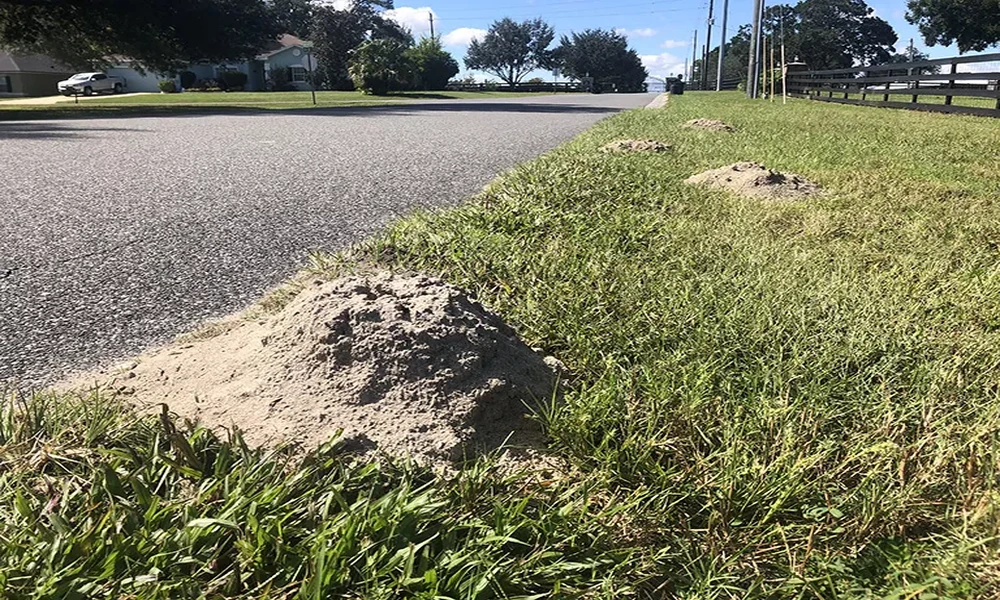

Yards around Woodcrest and parts of Mission Grove sometimes develop soft spots that weren’t there a few days earlier, often near sprinkler lines or where a slope meets flatter ground. Homeowners in Alessandro Heights may also notice fresh mounds of loose soil appearing along a fence after a week of regular watering. Those changes don’t always raise alarms at first. By the time many people realize gophers are responsible, the tunnel network has often been expanding underground for weeks, which is why gopher removal services are frequently called after the damage is already becoming visible.
Gophers leave behind more than small piles of dirt. An animal can create an extensive network of tunnels beneath a yard, and much of that activity stays hidden until the soil begins to settle or something above ground starts to change.
How Tunnels Affect the Ground Above
A gopher tunnel isn’t just a straight passage beneath the lawn. Over time, multiple tunnels branch out in different directions, leaving pockets of loose soil that may no longer support the surface the way they once did.
- Less support beneath slabs and walkways. When tunneling reaches areas close to a home’s foundation, patio, or sidewalk, the surrounding soil may begin to settle. Small cracks or uneven surfaces sometimes appear gradually instead of all at once.
- Damage to irrigation lines. Gophers often follow loose soil around buried sprinkler pipes. A damaged line may leak underground for quite some time before homeowners notice an unusually damp area or a higher-than-normal water bill.
- Sunken spots in the yard. Shallow tunnels can collapse after heavy watering or when someone walks across them, leaving dips that seem to appear without warning.
- Stress on trees and shrubs. Feeding on roots doesn’t always kill a plant immediately. Mature shrubs and trees may slowly decline over several weeks as portions of their root systems disappear underground.
Why Gophers Thrive in Many Riverside Yards
Loose soil is much easier for gophers to dig through than dense, compacted ground. That’s one reason many Riverside properties with sandy soil and regularly watered landscaping experience more activity. Homes near agricultural land, open space, or newer developments bordering undeveloped areas can also see more tunneling because nearby habitat supports larger gopher populations.
Watering habits make a difference as well. Lawns and planting beds that stay moist several days each week are easier to excavate than dry soil. During spring and early summer, when young gophers begin establishing territories of their own, it’s not unusual for new tunnel systems to appear in yards that had little activity the year before.
Knowing When the Damage Goes Beyond the Lawn
Not every mound points to a serious structural issue, but it’s worth paying attention to when other changes begin showing up nearby.
A walkway that suddenly develops a dip, hairline cracks forming close to a foundation, or doors and windows that begin sticking without another clear explanation can indicate that soil beneath the surface has shifted. While those problems can have several causes, active tunneling is one possibility that shouldn’t be overlooked when fresh mounds continue appearing in the same area.
Rather than focusing only on visible mounds, Akela Pest Control’s technicians trace active tunnel systems to locate where the greatest amount of underground activity is taking place. That approach helps identify the source of the problem instead of treating only its most obvious signs.
Reducing Long-Term Risk
- Install underground barriers around garden beds and other vulnerable areas where practical.
- Watch for unexplained wet spots, reduced sprinkler pressure, or rising water bills that could point to damaged irrigation lines.
- Deal with fresh mounds early before tunnel systems spread across larger sections of the property.
- Avoid unnecessary watering in areas where gopher activity has already been identified, since consistently soft soil is easier for them to tunnel through.
A few fresh mounds may not seem like much, but they’re often only the visible part of what’s happening below the surface. Addressing the problem early is usually simpler than repairing damaged irrigation lines, replacing stressed landscaping, or dealing with soil that has begun to settle around walkways and foundations.